
10:55 PMTuesday, October 13, 2026
To showcase and celebrate artisanal craftsmanship
D.C.
LDN
Lagos
Riyadh
Beijing
SG
2025-12-01
Written by Evelyn Carter




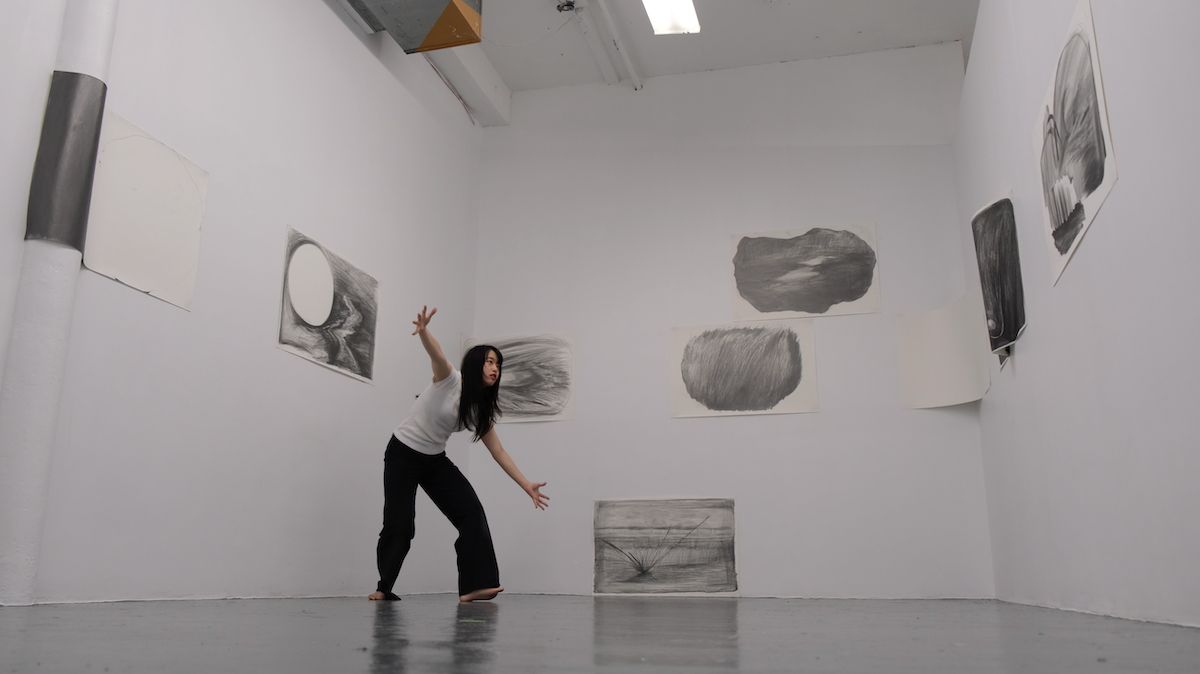
Burden of the mind (2024) | © Hannah Bang. Courtesy the artist
In her performance What is the Bundle?, interdisciplinary artist Hannah Bang examines endurance through a quiet, rhythmic relationship between the body, drawing, and a wall arranged with carefully taped pencils. Instead of placing the burden on her body, Bang constructs a visual score on the wall—twelve sharpened pencils per hour—each waiting for its turn. As the drawing progresses, paper tears, graphite accumulates, and the act of continuation becomes a central question. We spoke with Bang about responsibility, repetition, and the subtle tension between collapse and persistence.
Q1. How was the concept for What is the Bundle? begin?
Hannah Bang: It started with the question: What remains after effort? I was thinking about responsibility as something that accumulates quietly over time. So I wanted a structure where responsibility isn’t carried on the body but exists just slightly away from it—organized, visible, waiting. The pencils taped to the wall became that structure.
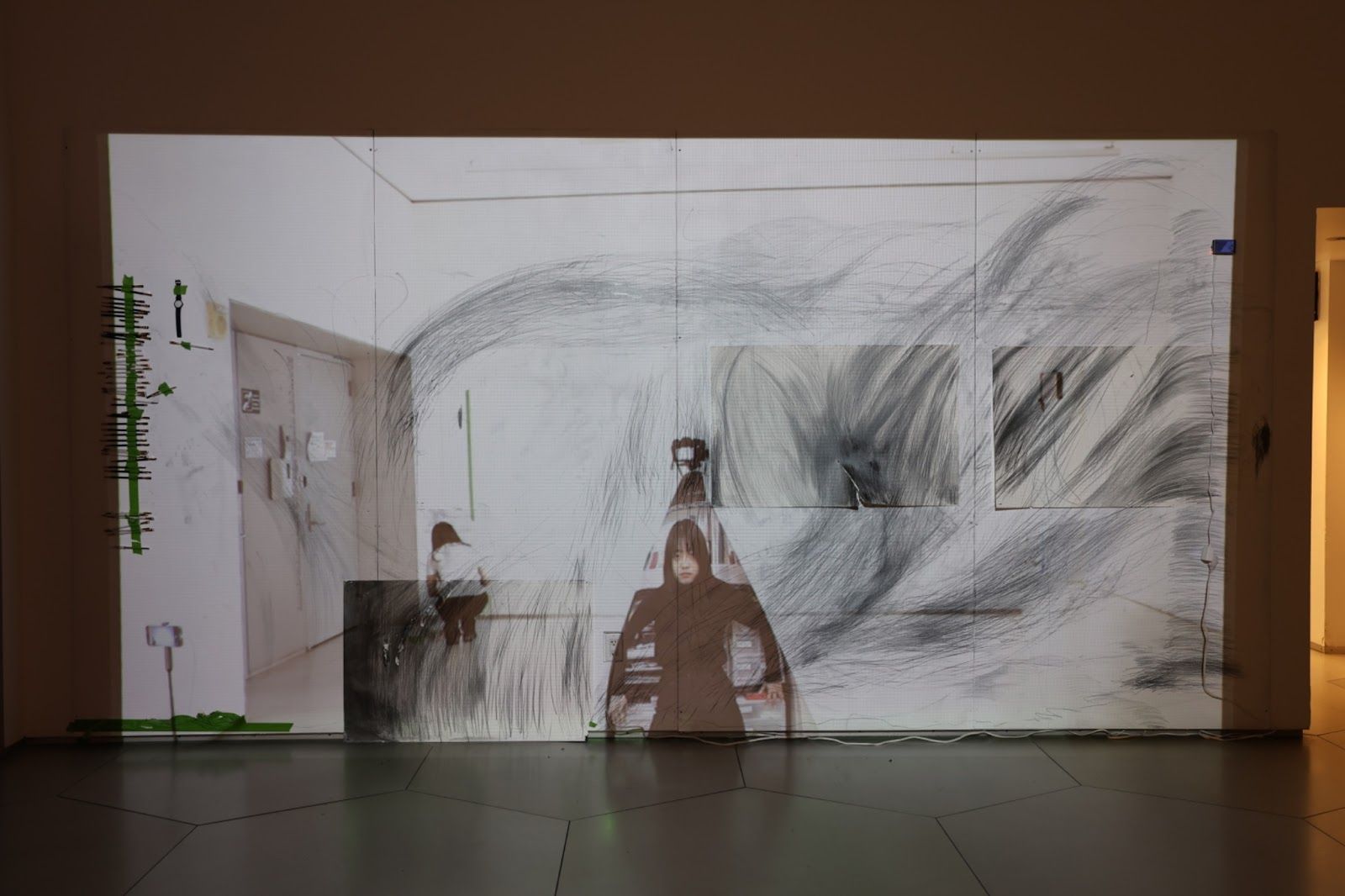
What is Burden? (2025) Pre-Performance, March | © Hannah Bang. Courtesy the artist
Q2. Why are the pencils arranged on the wall, rather than on your body?
Bang: When the pencils are on the wall, they act like a timeline or a queue of future tasks. They're externalized. Each pencil is a unit of duration. By removing them one by one, the performance becomes a negotiation between myself and a system I’ve already built.
If they were on my body, the weight would be about burden.
On the wall, the weight becomes anticipation, structure, memory.
Q3. Can you describe the process of performing the piece?
Bang: Before I begin, I tape sharpened pencils onto the wall in a straight or slightly curved line—twelve per hour. During the performance, I take one pencil from the wall, draw with it until it dulls or breaks, then reach for the next. The drawing begins on fragile paper, which eventually tears. Once the paper falls, I continue directly on the wall.
There’s a moment where the surface shifts without my decision. That is the part I love.
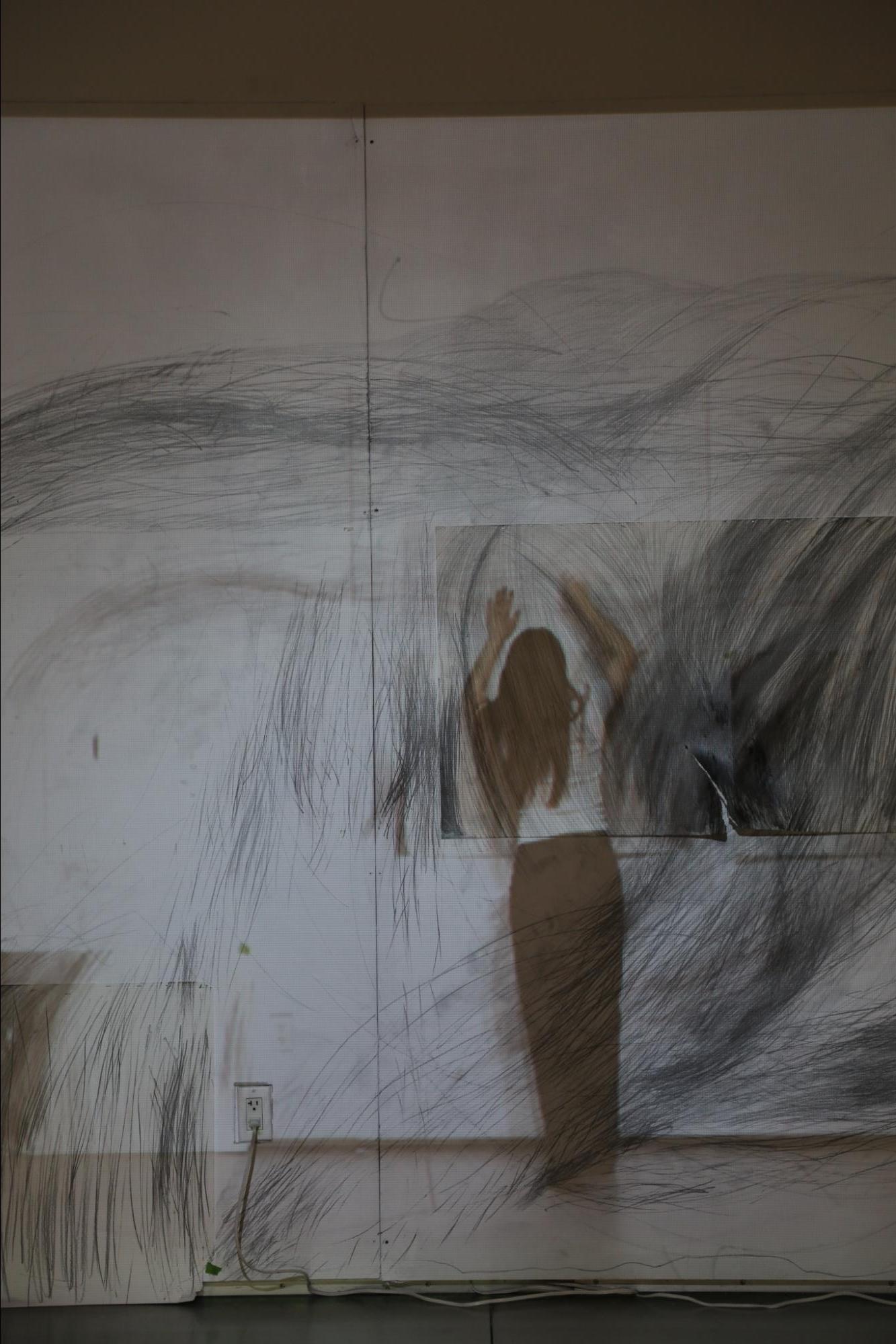
Detail of What is Burden? (2025) Pre-Performance, March © Hannah Bang. Courtesy the artist
Q4. The paper tearing feels symbolic. Is it intentional?
Bang: No. The paper is for professional drawing so it is not easy to tears. When it tears, the drawing transitions onto the wall behind it. This moment embodies responsibility—not as collapse, but as transfer. The work doesn't stop when conditions stop being ideal. It just shifts form.
Q5. Your work often addresses endurance. How do you define endurance in this piece?
Bang: Always the word endurance is heavy to me. Endurance is not spectacle. It’s attention.
I draw intentionally and continuously for one to four hours. Over time, the gesture becomes less about the image and more about the act itself.
I often say:
“I don’t perform to complete something; I perform to understand what remains.”
Endurance is the space where that understanding emerges.
Q6. What role does repetition play in the performance?
Bang: Repetition is how responsibility feels in daily life—quiet, cyclical, almost unnoticed. Each mark is small, but they accumulate. Repetition reveals change, fatigue, hesitations, and small decisions. It creates a pattern of persistence.
Q7. How do the visual components support the concept?
Bang:
The row of pencils structures time.
Graphite marks register the body’s effort.
Torn paper reveals the tension between fragility and persistence.
Shadow projections mirror the body’s movement, doubling the action.
The wall becomes a witness, holding the remains of effort.
Q8. What do you hope audiences experience while watching?
Bang: I hope they feel a kind of quiet urgency. Not intensity, but continuity. The transitions are subtle—paper tearing, pencils diminishing, graphite shifting tones with charcol's smells around the wall. I want viewers to notice the small things.
Q9. Responsibility appears to be a central theme. Why responsibility?
Bang: Responsibility accumulates, like marks.
One of the thoughts I return to is:
“Responsibility feels like a repeated mark—soft, but impossible to erase fully.”
This piece visualizes that accumulation.
Q10. When the performance ends, what remains for you?
Bang: The trace. The question. And the marks that refuse to disappear.
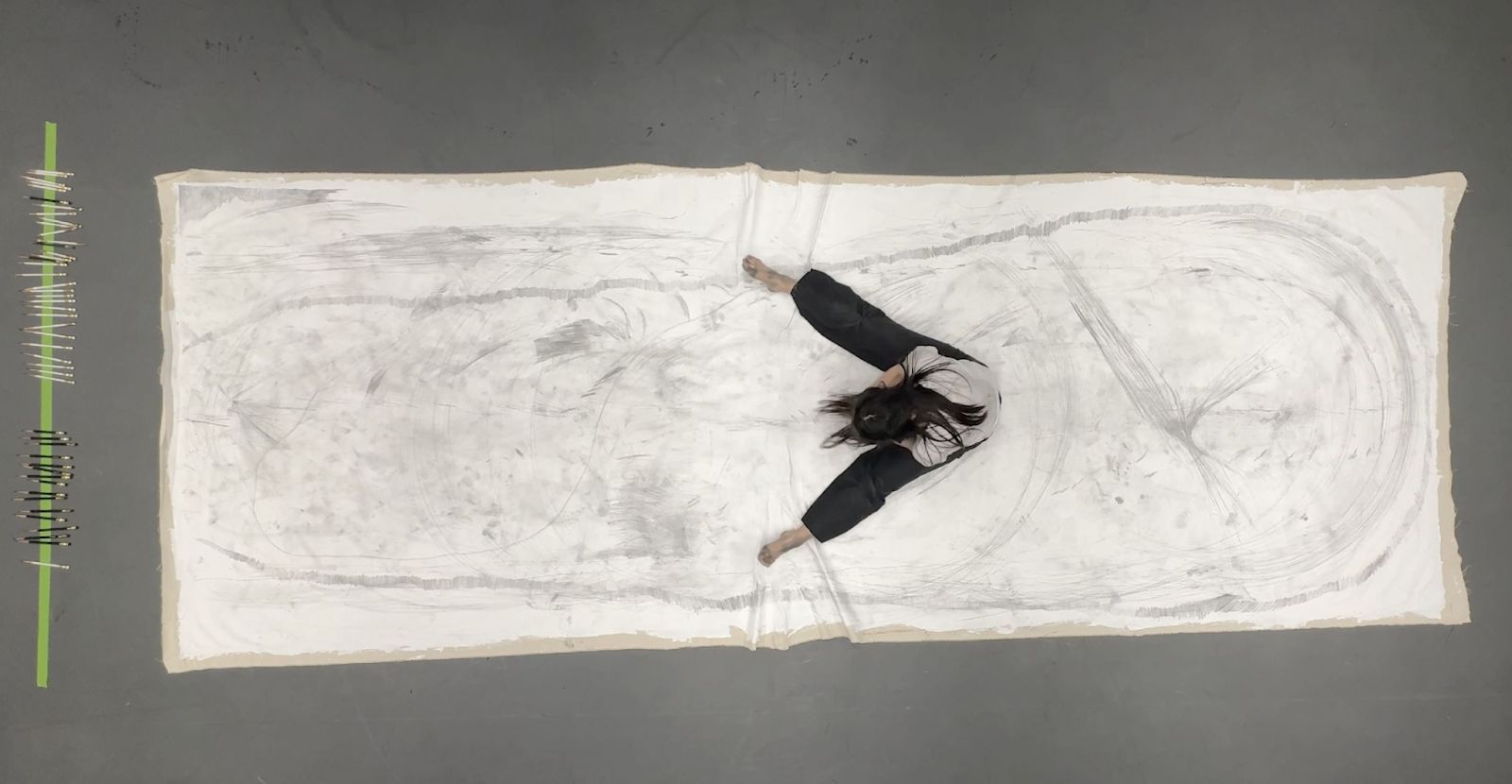
The Mind (2024) | © Hannah Bang. Courtesy the artist
Conclusion
Through a choreography of gestures and a wall lined with waiting pencils, Hannah Bang’s What is the Burden? transforms endurance into a delicate record of responsibility. The performance reveals how effort accumulates into quietly persistent forms—on paper, on walls, and within the viewer. In each tear and graphite line, Bang invites us to consider what remains after the moment of action has passed.


