6:54 PMMonday, September 21, 2026
To showcase and celebrate artisanal craftsmanship
D.C.
LDN
Lagos
Riyadh
Beijing
SG
2025-12-31
Written by Marcus Thompson




Exhibition Information
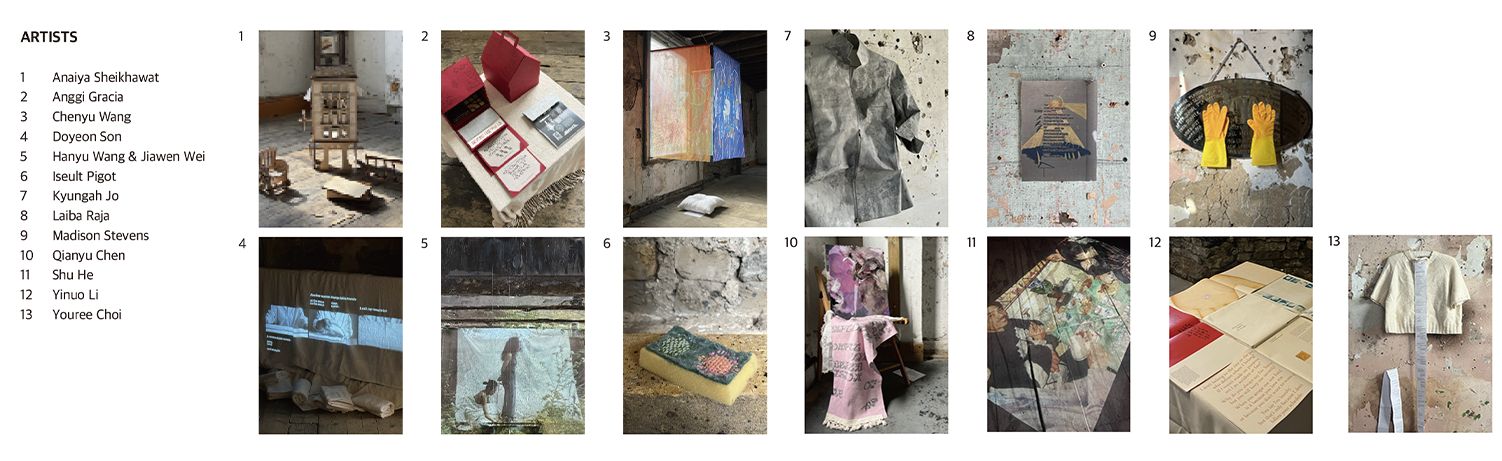
WORK FROM HOME
137 Copeland Rd, London SE15 3SN
12–13 September 2025
WORK FROM HOME foregrounds care and domestic labour—forms of emotional and physical work that sustain life yet remain persistently unseen. Through attentive gestures and repetitive actions, the exhibition invites viewers to encounter the small acts that quietly structure everyday existence.
While labour is often reduced to productivity and achievement in the public sphere, this exhibition insists that the architecture of life is upheld by what happens inside the home: cleaning, folding, waiting, caring. Domestic labour, particularly feminised labour, is frequently obscured in social discourse, yet without it, continuity and order would collapse.
The exhibition unfolds within a deteriorating Victorian house, a site that physically embodies the exhibition’s core concerns. As decorative surfaces peel away, what remains visible is the essential structure beneath. Similarly, the works presented here strip away ornamentation to reveal the core of hidden labour—fragile yet indispensable traces that resemble remnants surviving a fire.
Organised around domestic spaces such as the kitchen, living room, bathroom, and wardrobe, each room becomes a container for residual memory and labour. Visitors move from darker spaces to brighter upper floors, following a narrative trajectory in which invisible labour gradually comes into view. This progression is not merely spatial but dramaturgical: labour is not revealed all at once, but accumulates slowly, through repetition and attention.

Q. Your practice moves fluidly between film and curatorial work. How do objects, gestures, and voices come together as a single artistic language?
I am Doyeon Son, and I work as a Video Artist, and curator. I work by listening—listening to objects, to gestures, and to the layered memories embedded in people’s voices. Whether through film, photography, or exhibition-making, my practice begins with paying attention to what is often overlooked.
Rather than attempting to represent a collective experience directly, I start from my own personal history. I have learned that when I speak honestly from an individual position, connections to broader social experiences emerge more naturally. Film, in particular, allows time, rhythm, and memory to overlap—mirroring how identity itself is formed.
Curating functions as an extension of this practice. It is another way of building conversations between works that ask similar questions about care, gender, and invisible labour.
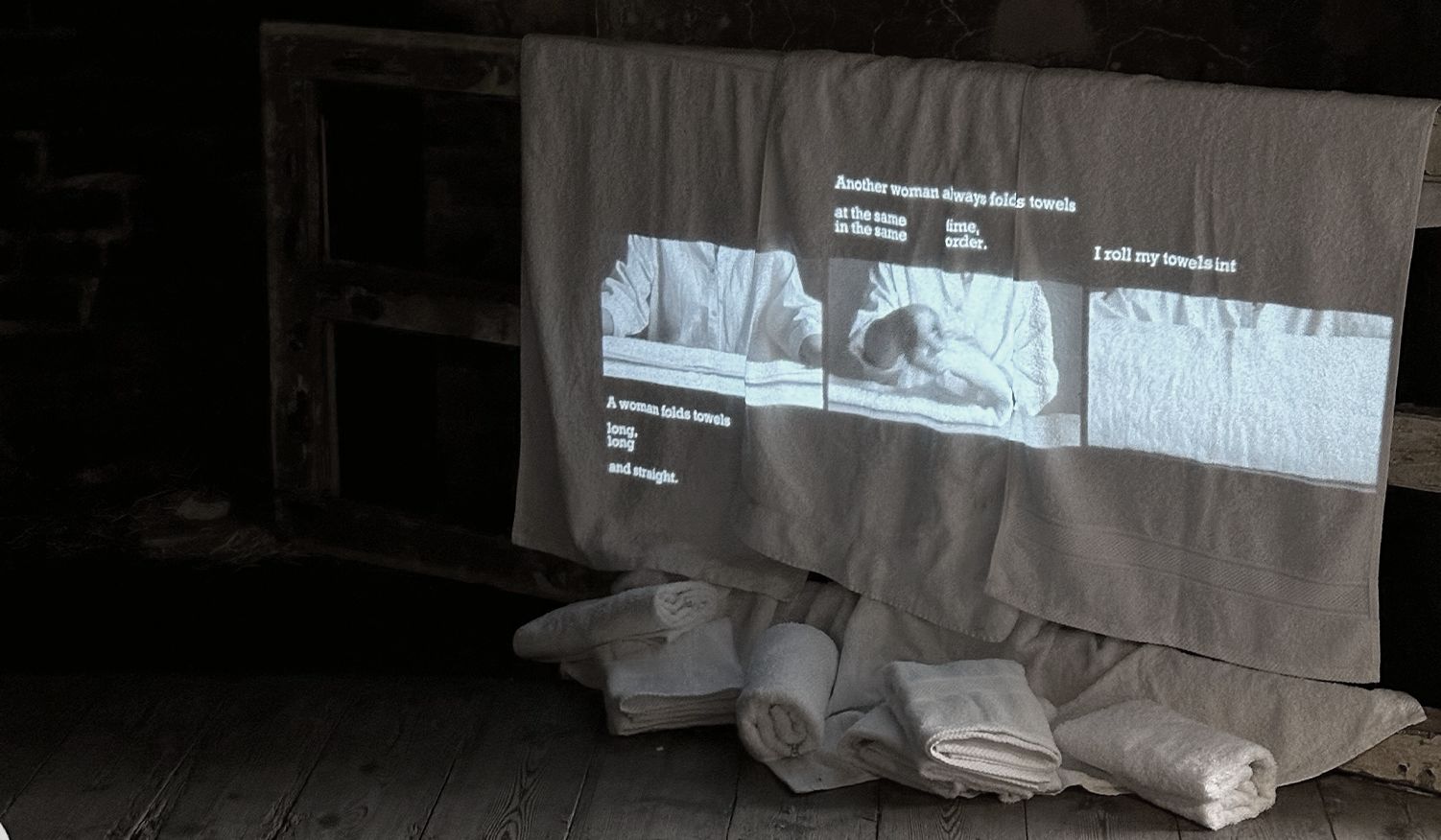
Q. Your video work How do you fold your towel? focuses on an intimate, repetitive gesture. How does this work operate within the exhibition?
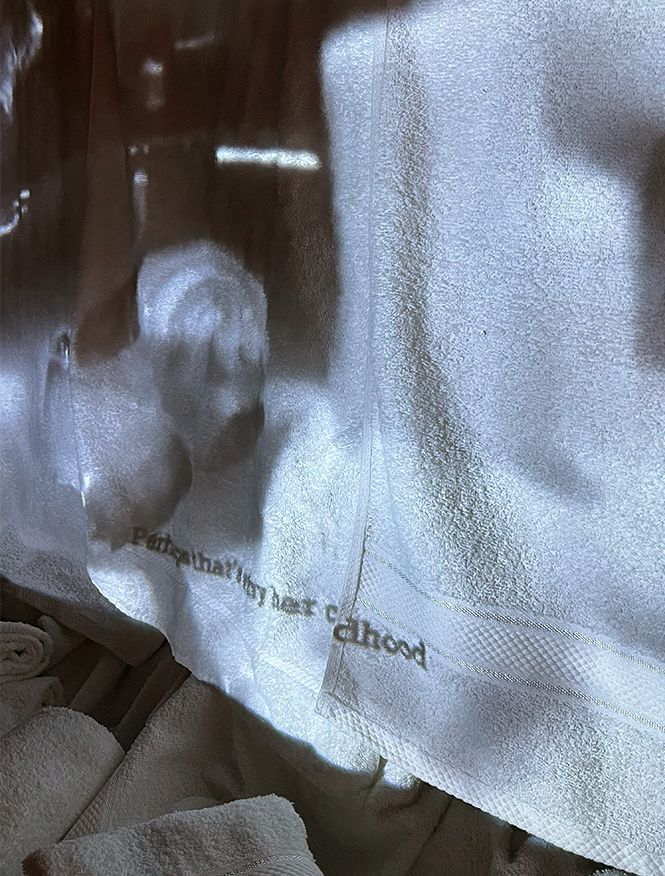
How do you fold your towel? (1920×1080, 3’00”) explores memory and relationships through the simple act of folding a towel. Long, tightly pressed, or rounded—each method becomes a way of living and surviving for three women.
Hands that fold towels to fit narrow shelves, hands that repeat unspoken rules shaped by absence, hands that remember silence after a fall no one asked about—these histories are inscribed in everyday motion. Repetition here is not mere habit, but a method of endurance, a fragile yet vital language of care.
Within WORK FROM HOME, this work acts as a conceptual anchor. It reflects on how identity is shaped through quiet gestures and everyday conversations. The film visualises how personal and inherited stories accumulate within the body, questioning the idea of a singular, fixed self in favour of a fluid and ever-shifting identity.
Q. The exhibition expands these intimate gestures into spatial experience. How did the house itself shape the narrative?
I wanted the exhibition to function like a film—where viewers move through a sequence of scenes. The Victorian house, with its worn thresholds and layered wallpaper, felt like a witness to endurance.
I imagined the space after a fire, stripped of decoration. What remains, I believe, is domestic labour. The exhibition begins in darkness and gradually moves toward light, echoing a process of emergence. Visitors are not asked to “study” artworks but to move through someone’s home, encountering traces of life left behind.
Q. In this exhibition, audience participation plays a central role. How do you envision the viewer’s role, and what experience or impression do you hope they take away?
The audience is not simply a spectator; they are both witness and participant. When visitors share their everyday habits—for example, the way they fold a towel—they leave a part of themselves within the space. The exhibition does not present a closed narrative; it functions as a living archive where individual contributions become integral to the work’s unfolding.
Even for those who entered merely to escape the rain or cold, the space serves as a temporary refuge, which in itself carries significance. Beyond this, the exhibition encourages visitors to reconsider their own repetitive and seemingly minor actions. It reveals how these small gestures, often overlooked, are in fact central to sustaining life, relationships, and the structures of daily existence. In this way, visitors leave with a renewed awareness of the subtle yet foundational labour that underpins their own and others’ lives.
WORK FROM HOME creates an experiential field that blurs the boundary between artwork and audience by emphasizing invisible labour and repetitive gestures. Doyeon Son’s practice illuminates how intimate, personal gestures—the folding of towels, the quiet routines of daily life—articulate the structures of living and relationality. The exhibition focuses attention on these private, everyday moments, prompting visitors to connect their own experiences to the work and to recognize the often-unacknowledged labour that sustains life.
Importantly, the exhibition extends beyond passive viewing. By inviting participants to leave traces of their own habits and memories, the space transforms into a living archive. This structure quietly yet powerfully emphasizes that the repetition and habits of daily life are not peripheral, but foundational forces that uphold both individual and communal existence. WORK FROM HOME embeds questions of care, labour, intimacy, and continuity within the interaction between artwork and audience, leaving an enduring experiential impression long after one leaves the space.